
How do apartment locators get paid? (And why renters pay nothing)
The full breakdown of who pays, why it works, and what’s in it for everyone.
If you’ve never worked with an apartment locator before, the first question is usually some version of how do apartment locators get paid and what’s the catch? The service is free, the help is real, and the answer to who pays for it makes the whole model click into place.
Here’s exactly how apartment locators get paid.
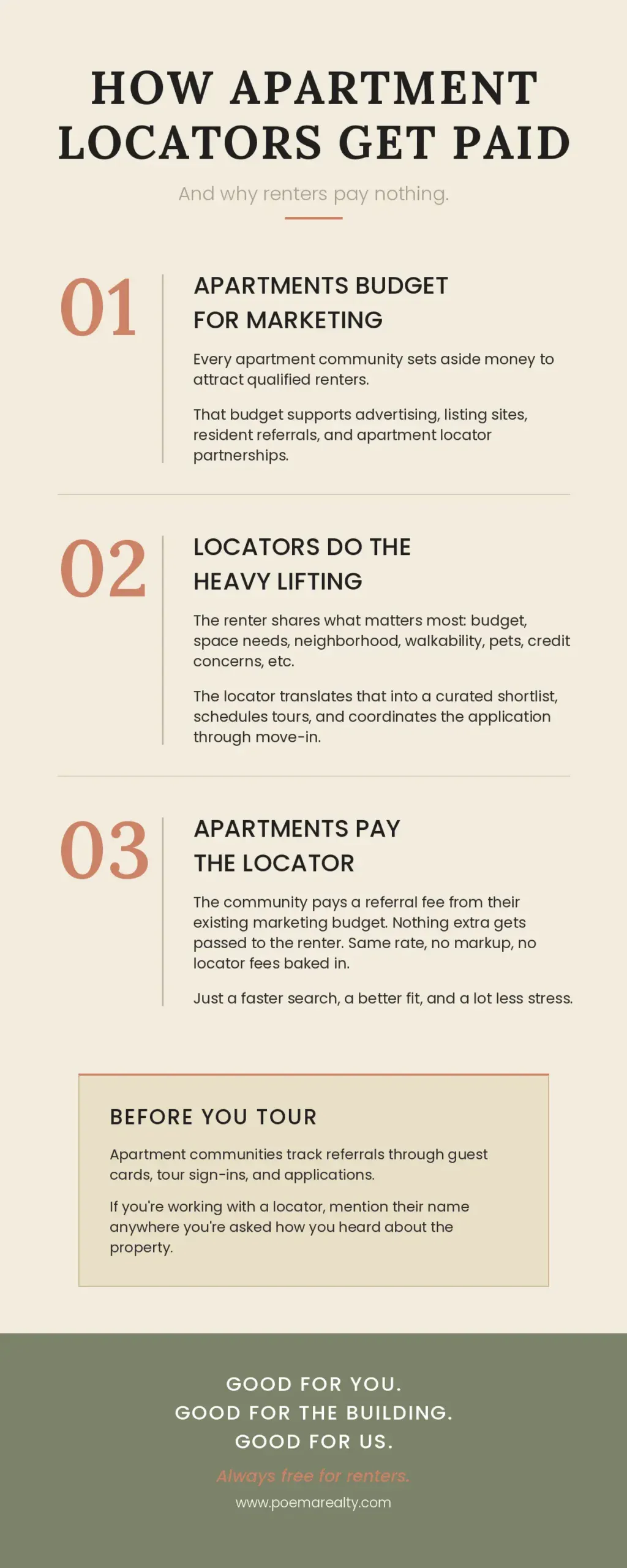
Apartments budget for marketing
Every apartment community sets aside money to attract qualified renters. That budget supports listing sites, online advertising, billboards, social media campaigns, resident referral programs, and partnerships with apartment locators.
It’s a real line item, not a fringe expense. Filling apartments is the entire business, and the cost of acquiring a new resident is one of the most important numbers a property manager tracks. Some channels (broad advertising) are expensive and produce a wide range of leads. Other channels (locator partnerships) cost more per signed lease but produce qualified, ready-to-rent tenants.
The point is: the money to pay locators is already there. It’s not new spending; it’s existing marketing budget allocated to a different channel.
Locators do the heavy listing
This is where the value happens.
A renter tells the locator what matters most: budget, neighborhood preferences, walkability, commute, pet requirements, credit considerations, and the daily-life details that affect quality of life. The locator translates that wish list into a curated shortlist of properties that genuinely fit.
From there, the locator:
- Sends a focused list of strong matches, with bottom-line numbers and tour-ready details
- Schedules tours efficiently so the renter can see the best options without wasting trips
- Coordinates the application process and answers questions about fees, terms, and timing
- Stays with the renter through signing, move-in, and the first few weeks of settling in
Done well, this saves renters endless scrolling and dozens of hours searching, comparing, and chasing leasing offices that don’t return calls. The locator’s experience is leveraged so the renter doesn’t have to see 100 places to know they’ve found the right short list to actually tour in person.
Curious about the full process? Read: How an apartment locator works →
Apartments pay the locator
When a renter signs a lease through a locator referral, the apartment community pays the locator a referral fee out of that same marketing budget already allocated to attract renters.
Nothing extra gets passed on to the renter. The rent on the lease is the same rate the apartment community is currently offering. That’s true whether you found it through a locator, a listing site, or by walking in off the street. No markup. No locator fee. No additional cost.
It’s the same business logic as a recruiter being paid by the company hiring (not by the candidate getting placed). The professional providing value to one party gets compensated by the party with the budget.
So when we say “free for renters,” we mean it literally. No catch, no asterisk, no fine print.
But is there a conflict of interest?
Nope.
We’re only paid when you find a place and move in. We get paid when you’re happy. That’s the whole alignment.
Wrapping up: how do apartment locators get paid?
Super simple:
- Apartment communities set aside marketing budget to attract qualified renters.
- Locators bring them qualified renters and help those renters find a place that actually fits.
- The community pays the locator a referral fee from that existing budget.
Your rent stays the same: no markup, no locator fees, no catch. It’s a model that works because everyone’s incentives point in the same direction: the renter ends up somewhere they love, the building fills a unit with a happy tenant, and the locator gets paid for delivering value.
Good for you. Good for the building. Good for us.
Ready to find your place?
Tell us what you’re looking for and we’ll send options that line up.